
Our services
Patios & Pavingin Newton Abbot,Torbay & Exeter
A level, free-draining patio built on a correct sub-base, so you spend your weekends using it, not re-laying sunken slabs and scraping weeds out of the joints.
30 years on the tools · 5.0 Google rating · £2 million public liability
30 years
Hands-on experience in Devon
5.0 rating
Average score on Google reviews
Fixed prices
Agreed in writing before we start
£2 million public liability
Fully insured, self-employed team covered
Natural stone, porcelain and block patios laid to a level, free-draining finish that still looks right in ten years' time.
What paving work actually involves
Paving covers everything from a small rear patio in a Newton Abbot terrace to a full block-paved driveway on a rural plot near Ashburton. The visible part is the stone, porcelain or block on top. The part that decides whether it still looks right in a decade is the excavation, the sub-base, the falls and the drainage underneath it.
We excavate to the depth the ground and the intended use require, lay and compact a sub-base in layers, set falls so surface water runs where you want it to, and bed and point the surface to suit the material. Edge restraints, steps and thresholds are detailed so the paving meets the house, the lawn and the boundary cleanly instead of being cut to fit at the last minute.
Who it is for and when it is needed
Most of the paving we lay falls into three situations. The first is a garden that has no usable flat surface, a slope, a tired lawn or a strip of cracked concrete that nobody sits on. The second is replacement: an existing patio that has sunk, cracked, gone green or started holding water against the house. The third is connection: paths, thresholds and terraces that tie the house, the lawn and the boundary together properly.
If water pools on your existing paving after rain, if slabs rock underfoot, if you can see a step forming where the paving has dropped away from the house, or if moss and weeds return within weeks of clearing them, the base has failed. Re-laying the surface on the same base repeats the problem.
Why professional groundwork matters
Paving is a groundwork trade wearing a decorative finish. A patio laid on sand over unconsolidated soil will move in the first wet winter regardless of how expensive the stone is, and one laid without considered falls will send water straight at the wall of the house.
Three decades of digging out South Devon ground, heavy clay, shillet, made ground behind old walls, is what tells you how deep to go and where the water will want to travel before any stone is ordered.
What's included
- Natural stone, porcelain, concrete and block paving
- Correctly excavated and compacted sub-base on every job
- Falls set so surface water runs away from the house
- Edgings, thresholds and cut detail finished properly
What it costs to leave it
Standing water finds the house
Paving laid flat or falling the wrong way pushes rainwater toward the building. Over time that shows up as damp at the base of walls, saturated ground against footings and a patio that is unusable for days after rain.
Settlement becomes a trip hazard
An under-compacted base settles unevenly. Slabs rock, joints open, and the difference in level at a threshold or step becomes something people catch a foot on: particularly at the back door in the dark.
Frost and weeds accelerate the damage
Once joints open, water gets in, freezes and lifts. Weed seed follows the water. What begins as one loose slab spreads across a whole area, and the repair cost climbs each season it is left.
The common mistake: buying the surface, not the build
Quotes are often compared on the price of the stone. Two prices for the same porcelain can differ by the excavation depth, the sub-base specification and whether drainage is included at all, and that is exactly where the difference in lifespan sits.
How the job runs
- Step 1
Site visit and measure
Phil comes out, measures the area, checks levels, looks at where water currently goes and at how materials can physically get on site. You talk through materials, layout and how you want to use the space.
- Step 2
Fixed price and programme
You get a fixed price calculated from the measured area and the labour the job genuinely needs, plus a realistic start window. An hourly rate only ever applies to unforeseen extra work, and we raise that with you at the time.
- Step 3
Excavation, sub-base and drainage
We dig out to depth, remove spoil, then lay and compact the sub-base in layers. Falls are set and any drainage, channel, soakaway or run-off routing, is built in at this stage, not added afterwards.
- Step 4
Laying, cutting and pointing
Slabs, porcelain or blocks are bedded, aligned and cut to the layout. Edges, steps and thresholds are detailed, then joints are pointed or jointed with the correct product for the material.
- Step 5
Handover
We clear the site, walk the finished work with you and explain any aftercare. If anything needs attention afterwards, Phil is the person who answers the phone.
What you get out of it
Built once
Correct depth and compaction mean the surface stays where it was laid instead of needing lifting and re-bedding in a few winters.
Water goes where you put it
Falls and drainage are designed into every patio as standard, keeping water off the house and out of the joints.
Safe underfoot
Level, stable paving with properly detailed steps and thresholds: no rocking slabs, no lips at the back door.
Cost controlled upfront
A fixed price from measured area and labour, so the figure you agree is the figure you pay unless something genuinely unforeseen appears.
One team, tidy site
The same small team does the groundwork and the laying, clears as it goes and takes the spoil away.
Materials we work with
The right material depends on exposure, foot traffic, the age and style of the property and how much maintenance you want to do.
- Natural stone: sandstone, limestone and granite. Varied tone and texture, sympathetic to older Devon properties, needs correct sealing and pointing.
- Porcelain: dimensionally consistent, low porosity, stays clean with little effort. Requires a slurry primer and precise bedding, so laying tolerances matter.
- Block paving, the usual choice for driveways. Interlocking blocks spread vehicle load and individual blocks can be lifted and reset if a service ever needs digging up.
- Concrete flags and setts: cost-effective for larger areas, paths and utility spaces, with setts used for edging, aprons and detailing.
- Gravel over a bound or celled base: free-draining and well suited to rural driveways where a solid surface would look out of place.
Methods: what happens below the surface
Excavation depth is set by use. A pedestrian patio needs less than a driveway carrying a car or a van, and made ground or soft clay needs more again. Spoil is removed rather than spread around the garden to hide it.
Sub-base material is laid in layers and compacted, because a single deep layer cannot be consolidated properly through its full depth. Falls are set during this stage so the finished surface sheds water consistently across the whole area rather than just near the drain.
Bedding differs by material: a full mortar bed for natural stone, primer and bed for porcelain, compacted sharp sand over a restrained sub-base for block paving. Edge restraints stop the whole surface from spreading sideways over time, the single most common reason older patios open up at the perimeter.
Variations and situations
Sloping sites frequently need a combination of paving and retaining walls to create a level terrace. Where the level change is significant, steps, a low wall and drainage behind it are designed as one piece of work rather than three separate jobs.
Paths, side returns and thresholds get the same treatment as the main terrace: consistent falls, matched materials and a cut edge rather than a gap filled with mortar. Front gardens often combine paving with permeable margins so run-off is managed on the plot.
Restricted-access city gardens in Exeter and terraced streets in Torquay change the method more than the specification: barrowing distances, protection of shared routes and staged deliveries all get planned before the first day on site.
Domestic and commercial paving
Domestic work is led by appearance, comfort and how the family uses the space. Commercial and light-commercial areas: parking bays, access paths, courtyards behind premises, put more weight on load-bearing capability, surface consistency and keeping the area usable during the build.
The build principles are identical. What changes is depth, edge restraint and how the programme is sequenced so access is maintained.
Examples of our work
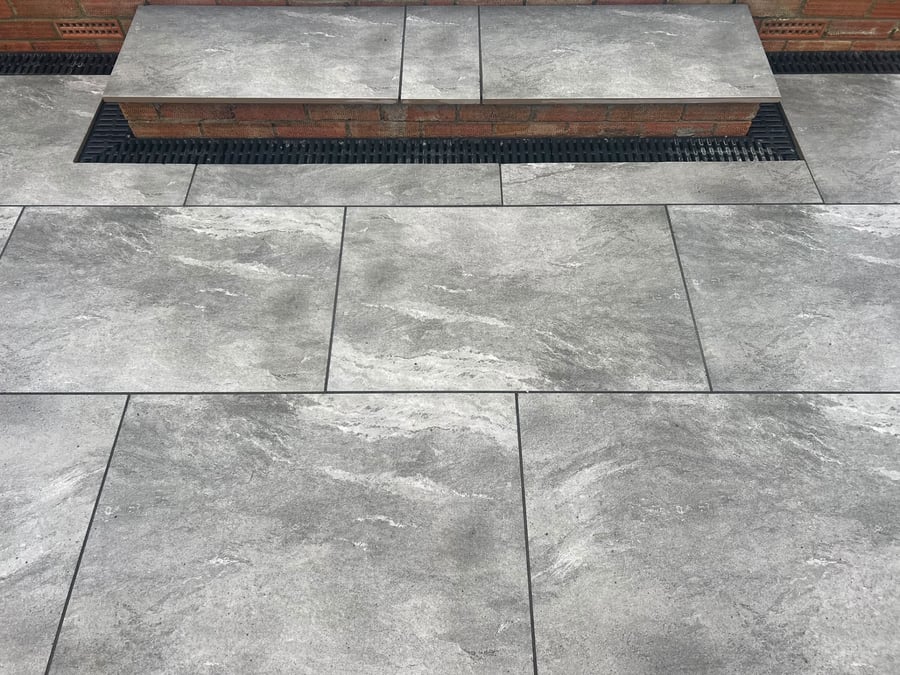
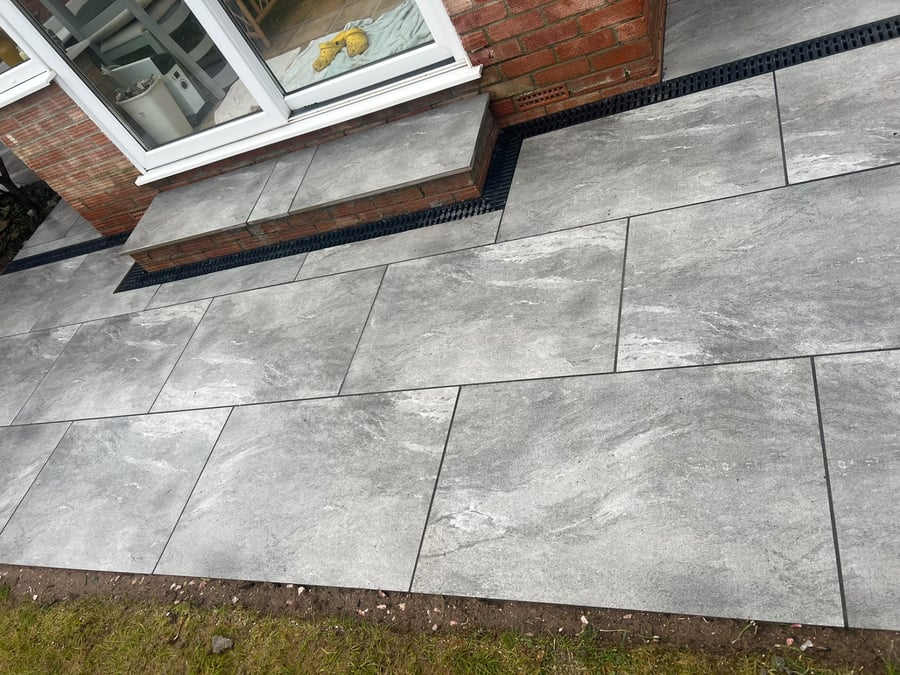
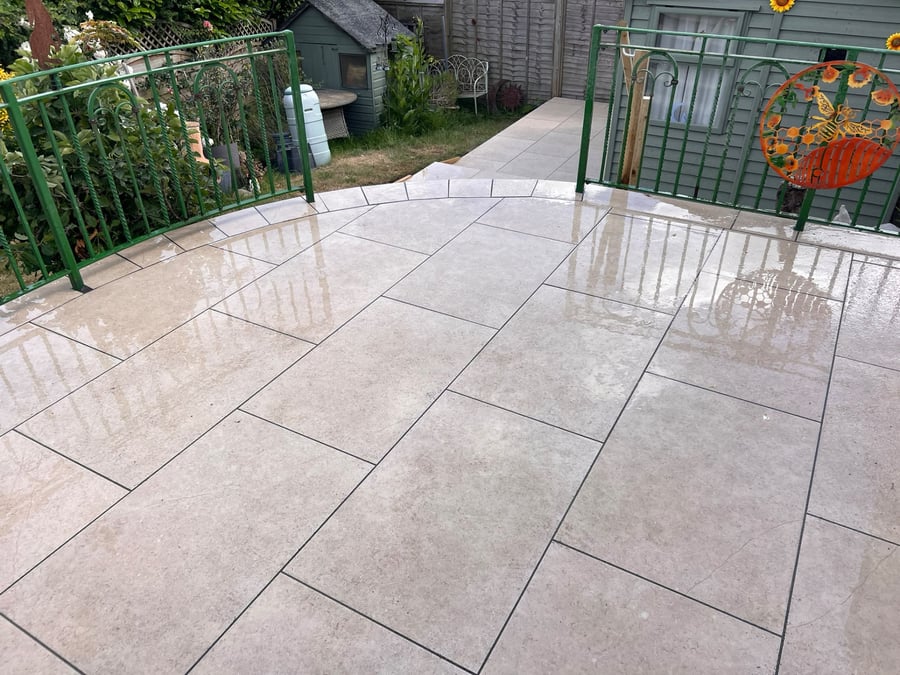
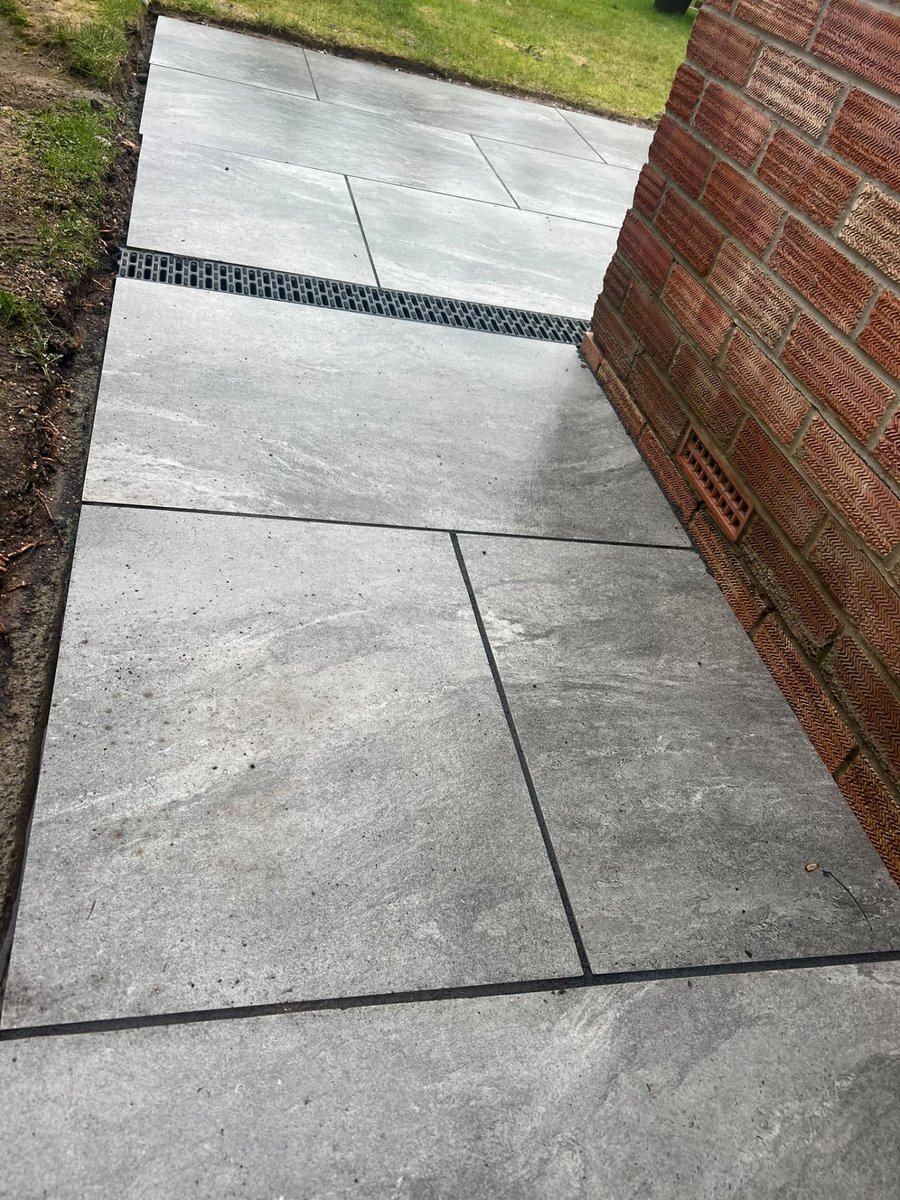
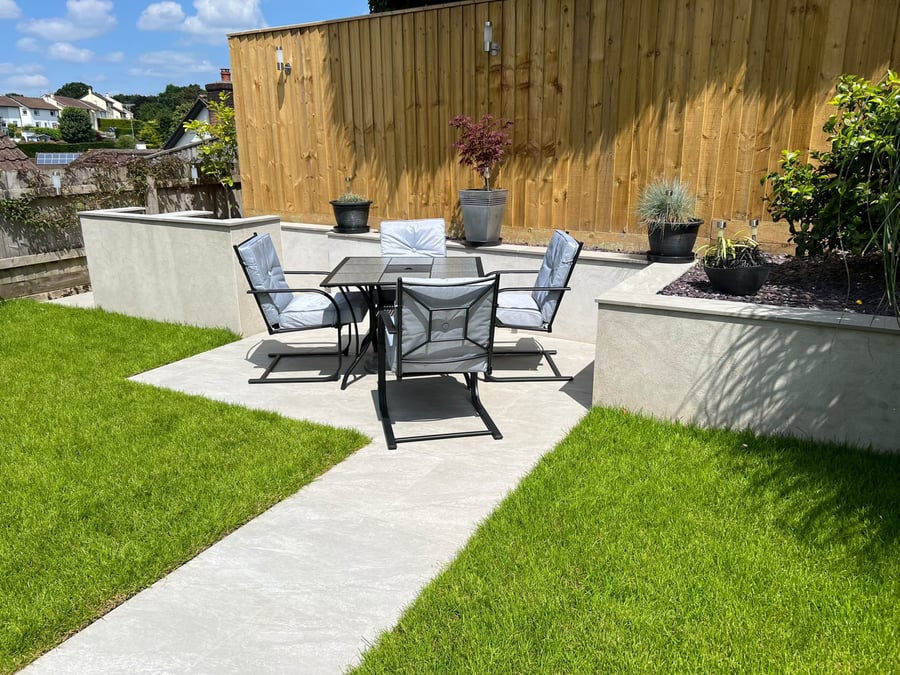
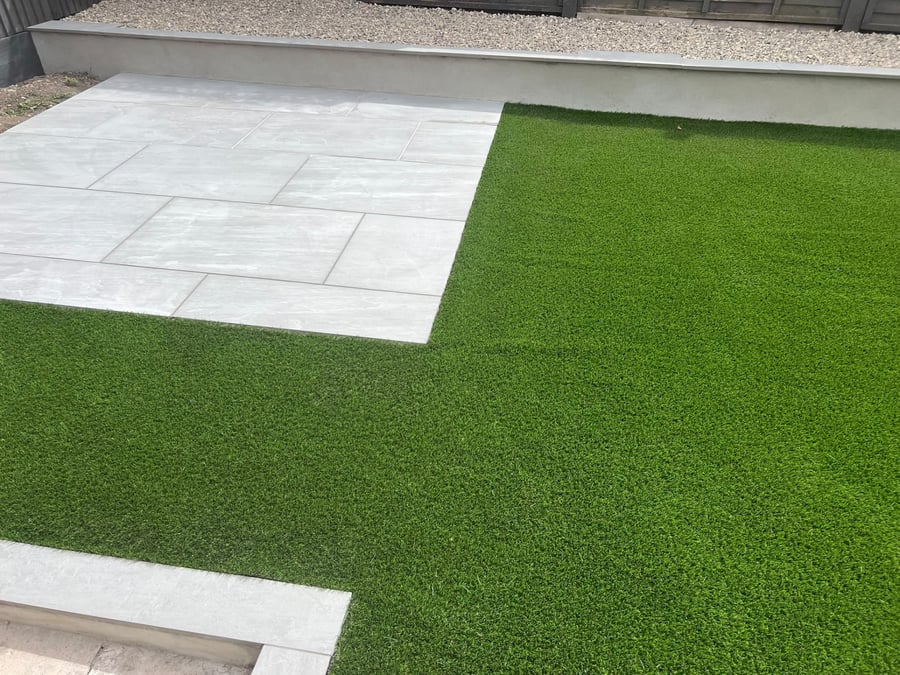
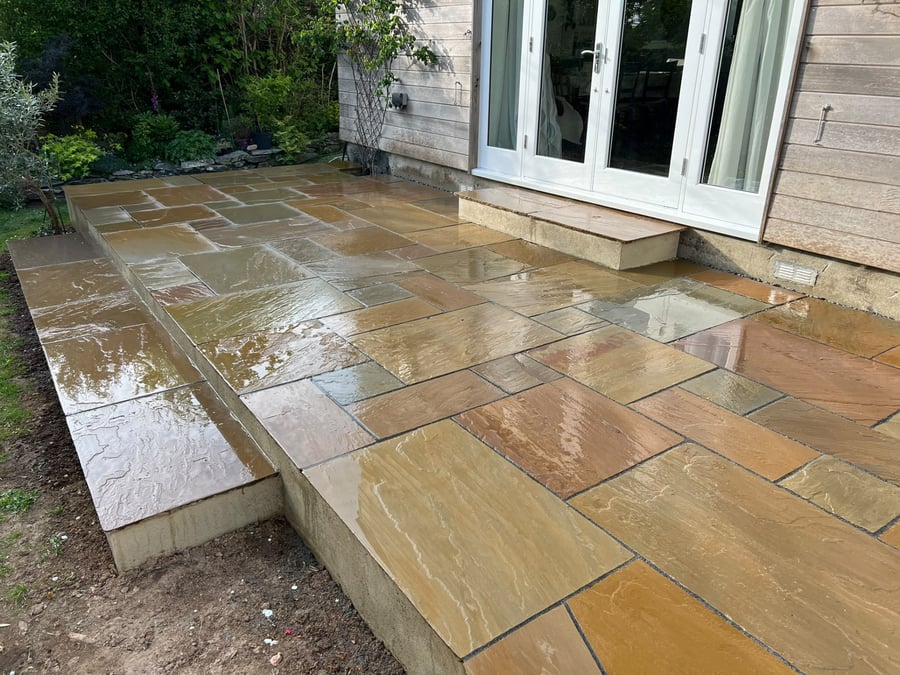
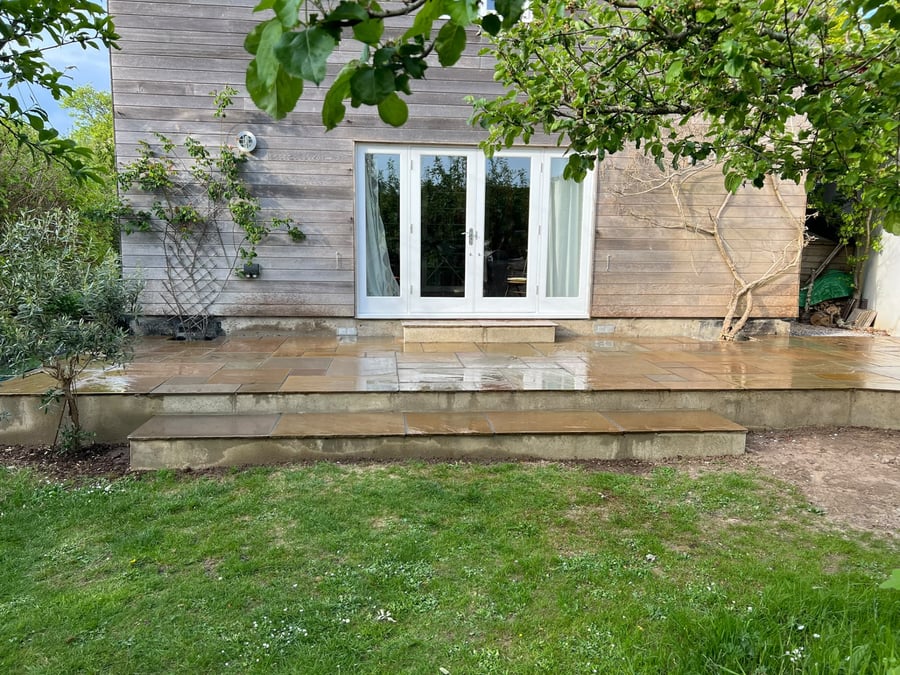
Slide through photos of finished projects across South Devon.
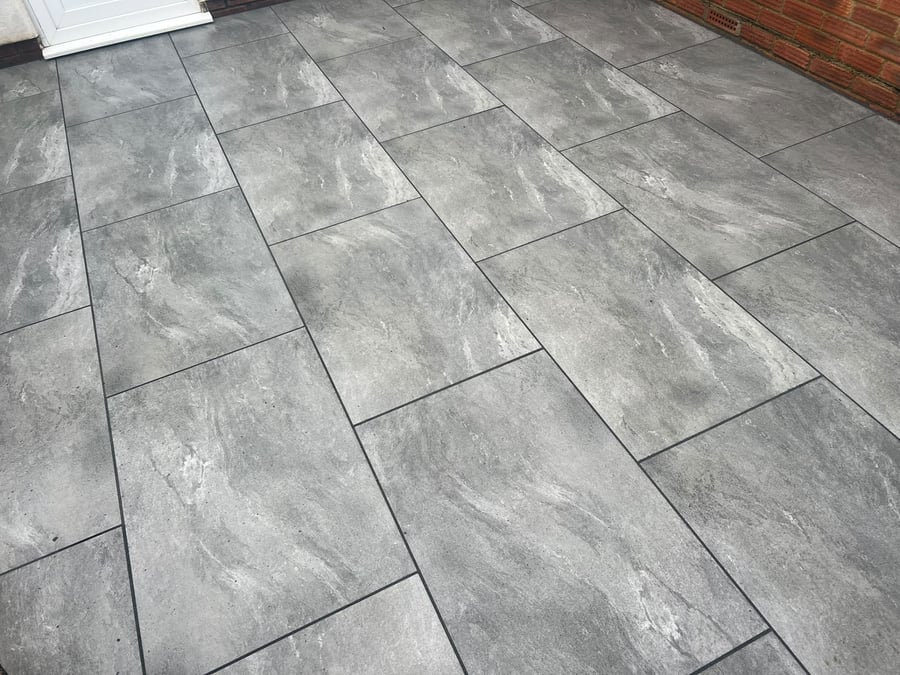
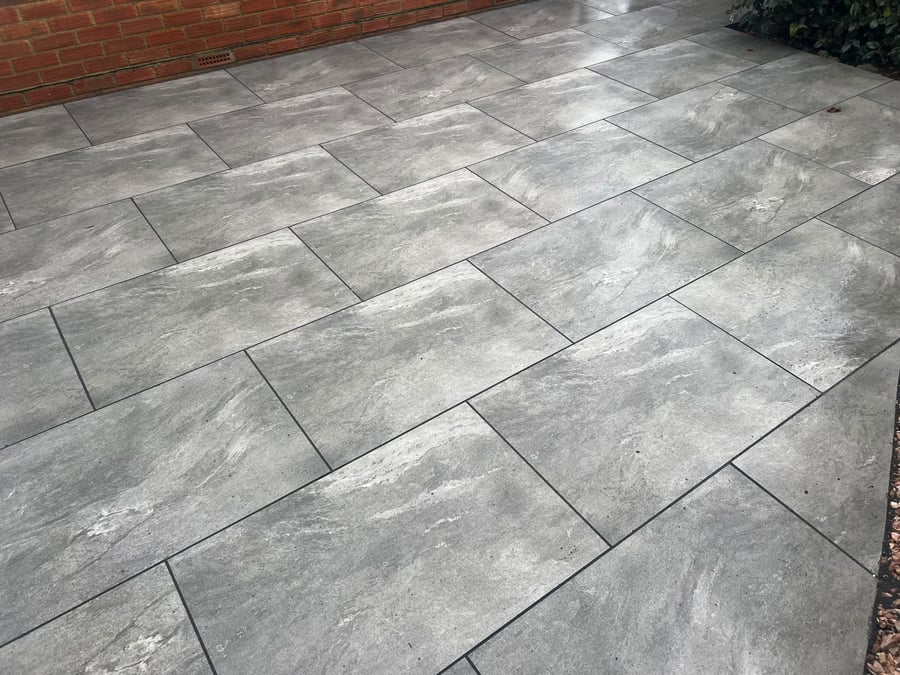
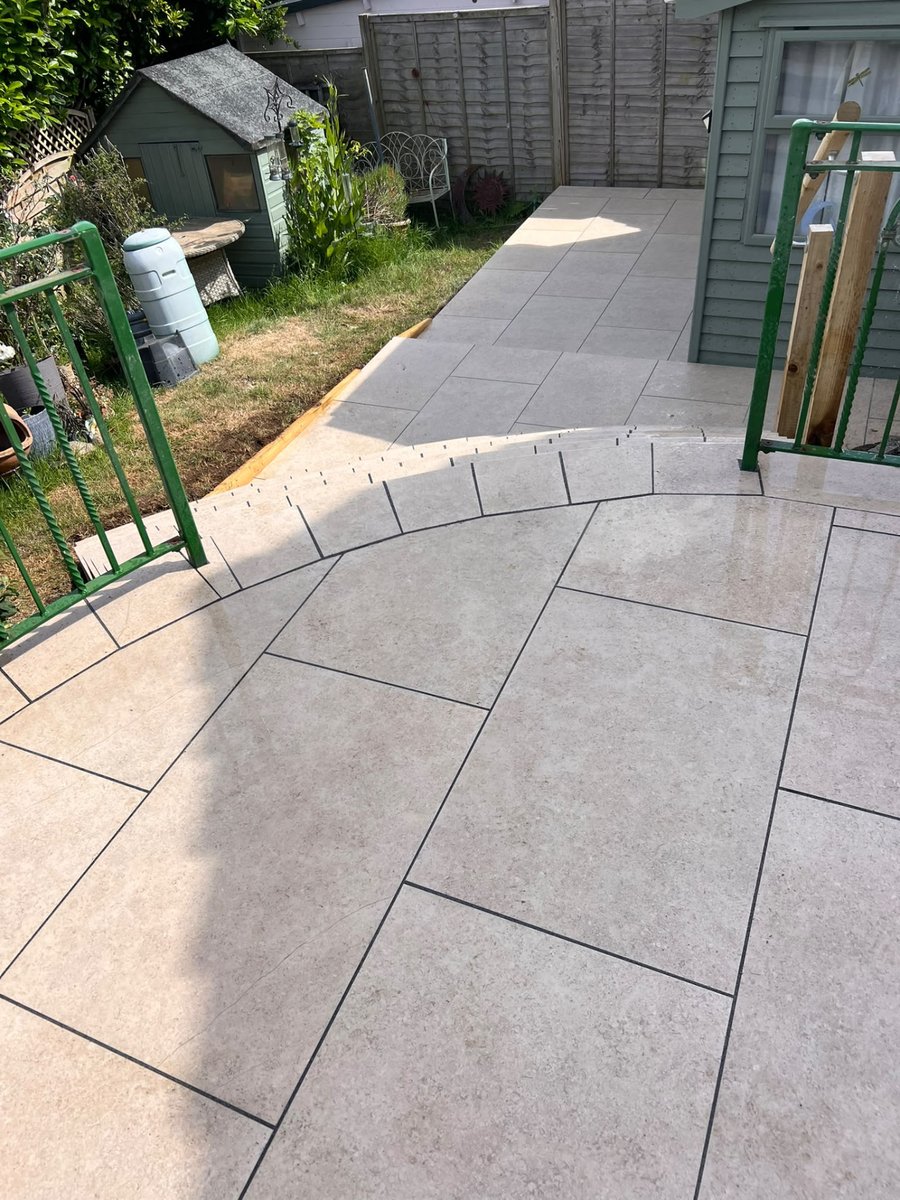
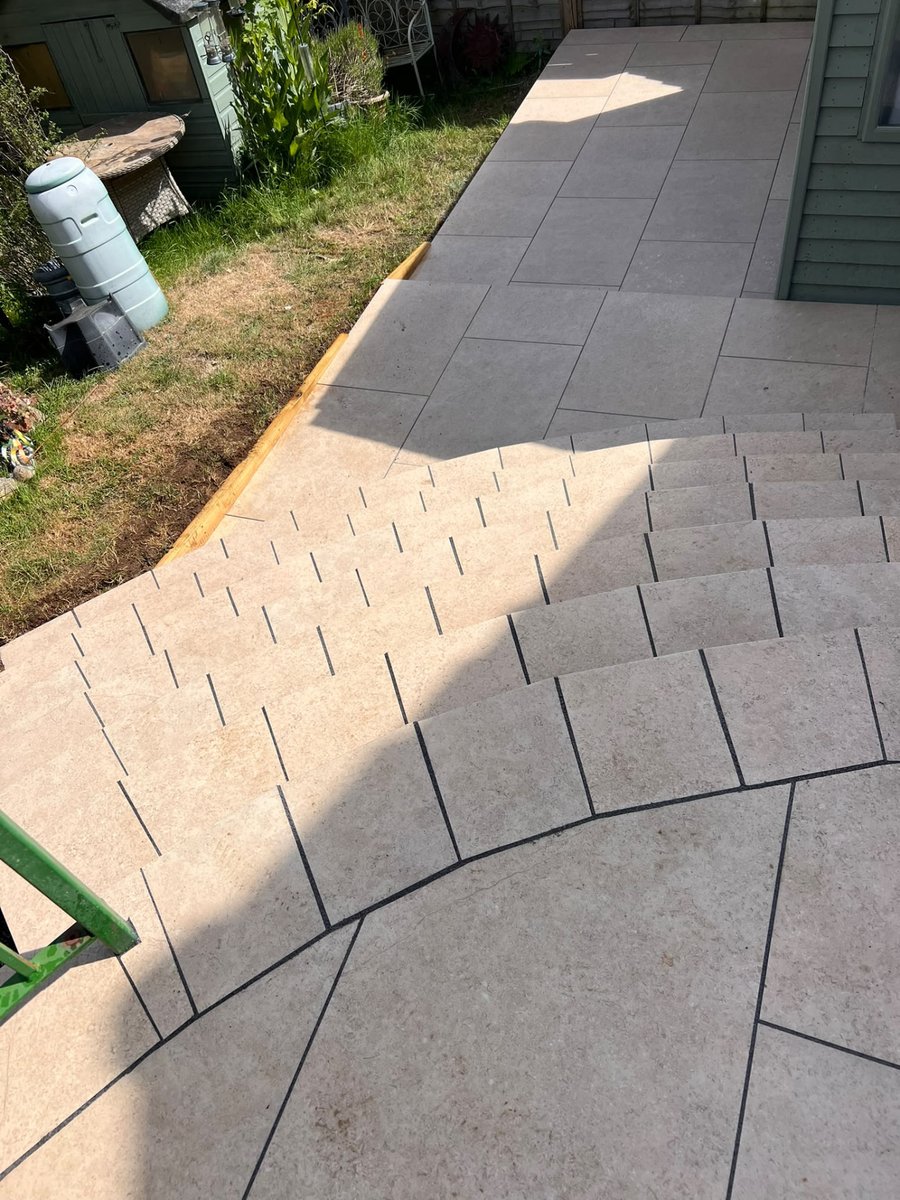
Where we do this work
Related services
Back to the PC Landscaping homepage, see all services or get in touch with Phil.
Patios & Paving: common questions
How much does a new patio cost in South Devon?
Every patio is priced individually because the figure depends on area, excavation depth, spoil removal, drainage and the material you choose. Phil measures the site and gives you one fixed price before any work starts, so there are no surprises part-way through.
How long does a patio take to lay?
A typical domestic patio is usually a matter of days rather than weeks; anything involving retaining walls, steps or significant level changes takes longer. You get a realistic programme with your fixed price, and we work 8am to 6pm Monday to Friday.
Do you take the old patio or concrete away?
Yes. Breaking out the existing surface, removing spoil and disposing of it is part of the job and is included in the fixed price we quote.
How long should a properly built patio last?
Decades, when it is built correctly. The lifespan of paving is set by the base beneath it, which is why we spend the time on excavation, compaction and drainage rather than rushing to get the surface down.
Will my patio need drainage?
Water displacement is considered on every patio we lay, not sold as an extra. What form that takes: falls, a channel, a soakaway or permeable margins, depends on your ground and where the water can safely go.
Can you lay paving on a sloping garden?
Yes. Sloping plots are normal across Teignbridge, Torbay and the South Hams. We usually create a level terrace using retaining walls and steps, with drainage behind the retained ground, so you gain a genuinely usable area.
Do you work in Torquay, Exeter and Totnes as well as Newton Abbot?
Yes. We're based in Denbury near Newton Abbot and work across Teignbridge, Torbay, Exeter and the South Hams.
What deposit do you take?
On larger projects there's sometimes an initial deposit of around 10%. In all cases 50% is due once the job has started, with the balance on completion.
Client feedback
Recent words from South Devon gardens
“Phil finished the remainder of my featherboard fence. Started the job promptly, arrived on time and finished the job professionally.”
Big Steve
Featherboard fencing · Google review
“Fitted our hardwood deck and it looks great! Decent price and took just a couple of days plus they cleaned up after themselves.”
Steve Marson
Hardwood decking · Google review
“Phil and Nigel did a complete redesign of our garden, did a very professional job from start to finish… this is the second job they have done for us and we have another project for later in the year.”
Robert Down
Full garden redesign · repeat client · Google review
“Fab job for my pathway around my house and patio… Phil's suggestion and explanation of the construction work was the most solid.”
Hung Alice
Pathway & patio · Google review
Get a fixed price for your new patio
Phil visits, measures and talks through materials and drainage before quoting, so the price you agree is the price you pay.
30 years' experience · £2 million public liability · 8am–6pm, Monday to Friday