
Our services
Garden & Patio Stepsin Newton Abbot, Torbay& the South Hams
Solid-built steps with even risers and generous treads, linking terraces and back doors on sloping Devon plots, the detail you stop noticing because it simply works.
30 years' experience · Built on footings · £2 million public liability
30 years
Hands-on experience in Devon
5.0 rating
Average score on Google reviews
Fixed prices
Agreed in writing before we start
£2 million public liability
Fully insured, self-employed team covered
Brick, block and stone steps linking terraces, patios and back doors on sloping Devon plots.
What garden steps involve
Steps connect the levels a Devon garden already has: a back door above the terrace, a terrace above the lawn, a path climbing a bank. We build them in brick, block, natural stone and porcelain, with treads that match the paving they lead to.
Structurally a flight is a small piece of masonry: a footing, a built core, then treads and risers faced to suit the garden. Free-standing slabs stacked on sand are not steps, they're a trip hazard waiting for a wet evening.
When steps are the answer
Any level change of more than a slab's thickness is worth building as a proper step rather than a lip. Where the change is larger, a flight with a landing usually beats a single steep run.
Existing steps need replacing when the risers have become uneven, the treads have sunk or tilted, the nosings have crumbled, or they've become slippery in shade: all of which are common in older South Devon gardens.
Why even risers matter more than anything else
People climb steps without looking. The brain learns the rhythm of a flight within two steps and then stops checking, which is exactly why an odd riser at the top is where falls happen.
Consistent rise, a going deep enough to take a whole foot, a small fall across the tread to shed water and a nosing you can see in low light are the four things that separate a safe flight from a hazard by the back door.
What's included
- Consistent rise and going across the whole flight
- Concrete footings and solid-built cores, not dry-stacked slabs
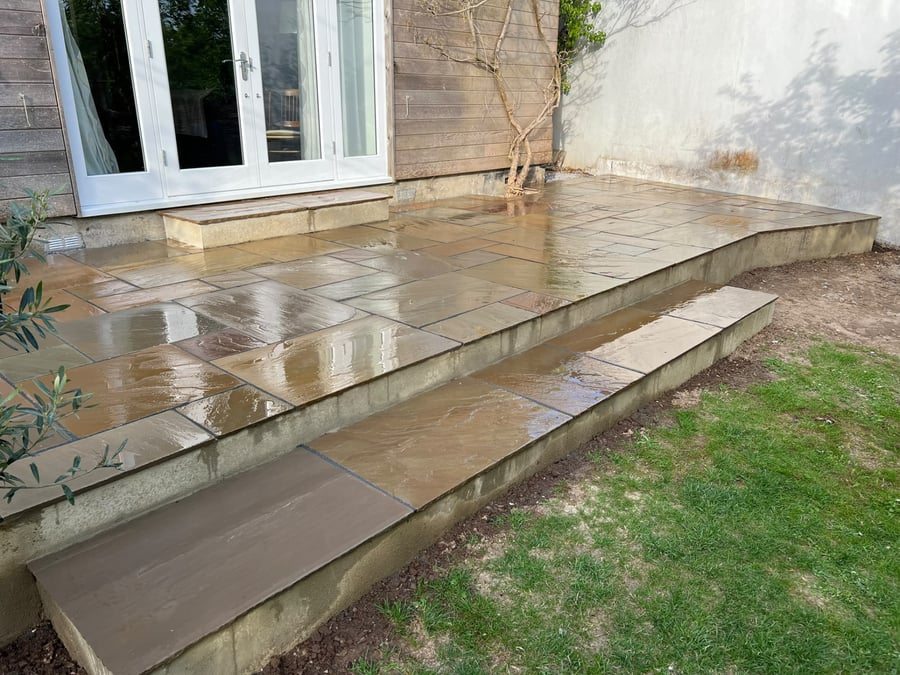
- Stone, porcelain and brick treads matched to the patio
- Handrail fixings and lighting ducting built in where needed
What it costs to leave it
One odd riser causes the fall
A flight with an inconsistent step is the classic garden trip. It catches visitors, older relatives and anyone carrying something down to the bins after dark.
Dry-laid slabs rock and slide
Steps built without footings or a solid core move with the ground and with use. Once a tread rocks, the whole flight starts to loosen.
Water sits on flat treads
No fall across the tread means standing water, which means algae in shade and ice in January: on the one part of the garden you can't avoid using.
The common mistake: treating steps as a paving offcut
Steps often get squeezed in at the end of a patio job with leftover slabs. They deserve their own setting out, their own footing and their own budget line.
How the job runs
- Step 1
Measure the level change
Phil measures the total rise and the space available, then works out the number of steps, the rise per step and the going so the flight is comfortable rather than steep.
- Step 2
Design and fixed price
Materials, width, any landing, handrail fixings and lighting ducting are agreed, then you get one fixed price.
- Step 3
Footings and core
We excavate and pour a footing, then build the core of the flight in block or brick so every tread is carried on solid masonry.
- Step 4
Treads, risers and finish
Treads are bedded with a slight fall and a nosing overhang, risers faced to match the garden, and the flight tied cleanly into the paving and any adjoining wall.
- Step 5
Handover
We clear the site, walk the finished work with you and explain any aftercare. If anything needs attention afterwards, Phil is the person who answers the phone.
What you get out of it
Safe in the dark
Even rises, deep treads and a visible nosing, plus ducting for step lighting where you want it.
Built on footings
A masonry core on a proper footing means treads that don't rock, tilt or slide out over time.
Matched to your paving
Treads in the same stone or porcelain as the terrace, so the steps read as part of the design.
Drains itself
A slight fall across every tread keeps water moving instead of freezing where you step.
Handrails allowed for
Fixings designed into the structure where a rail is wanted, rather than drilled into a finished tread afterwards.
Step types we build
The right flight depends on the level change, the space you have and what the steps lead to.
- Straight flights, the standard connection between a terrace and a lawn or a back door and a patio.
- Steps with landings: used where the rise is large, breaking the climb and giving somewhere to turn.
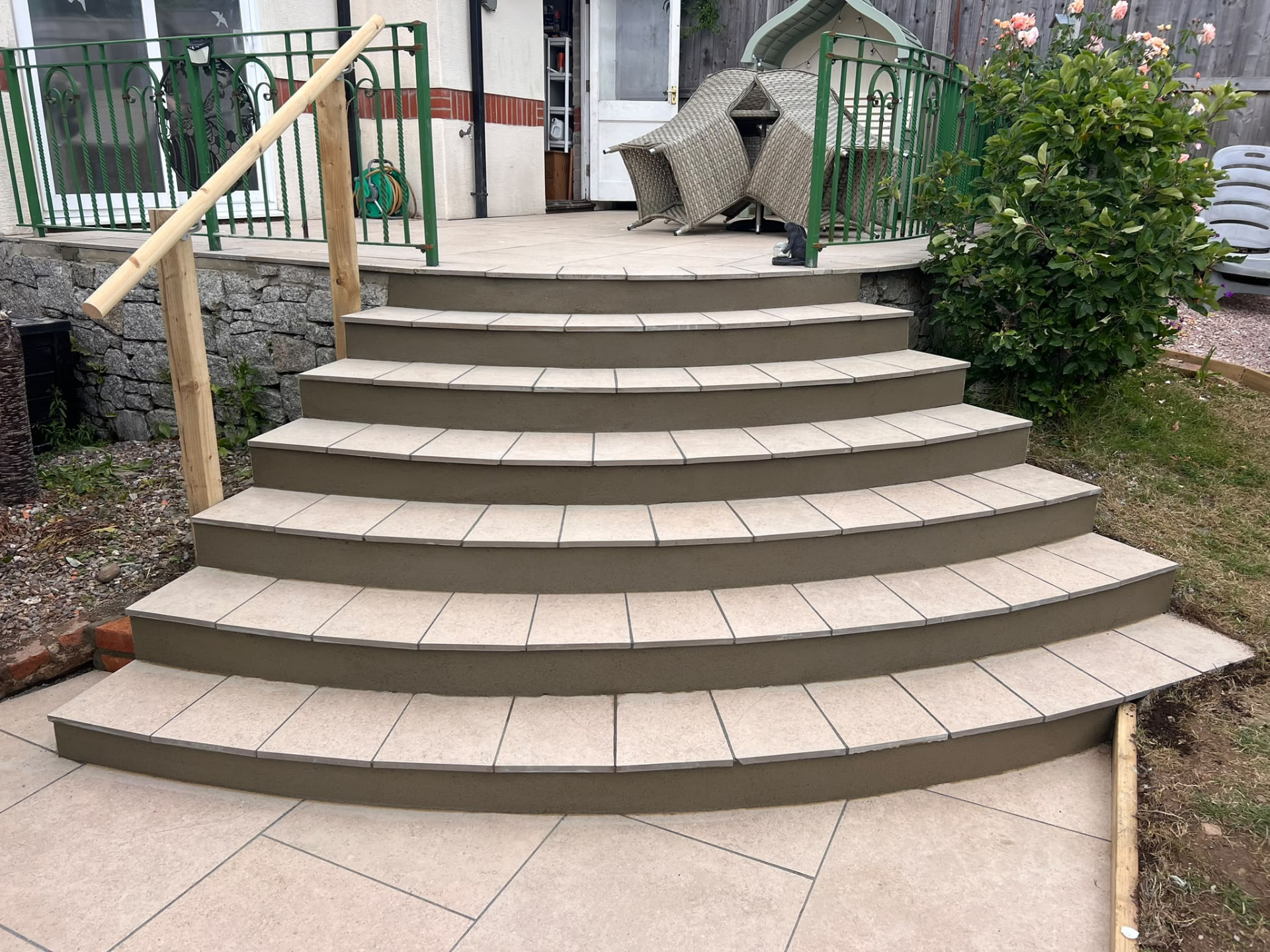
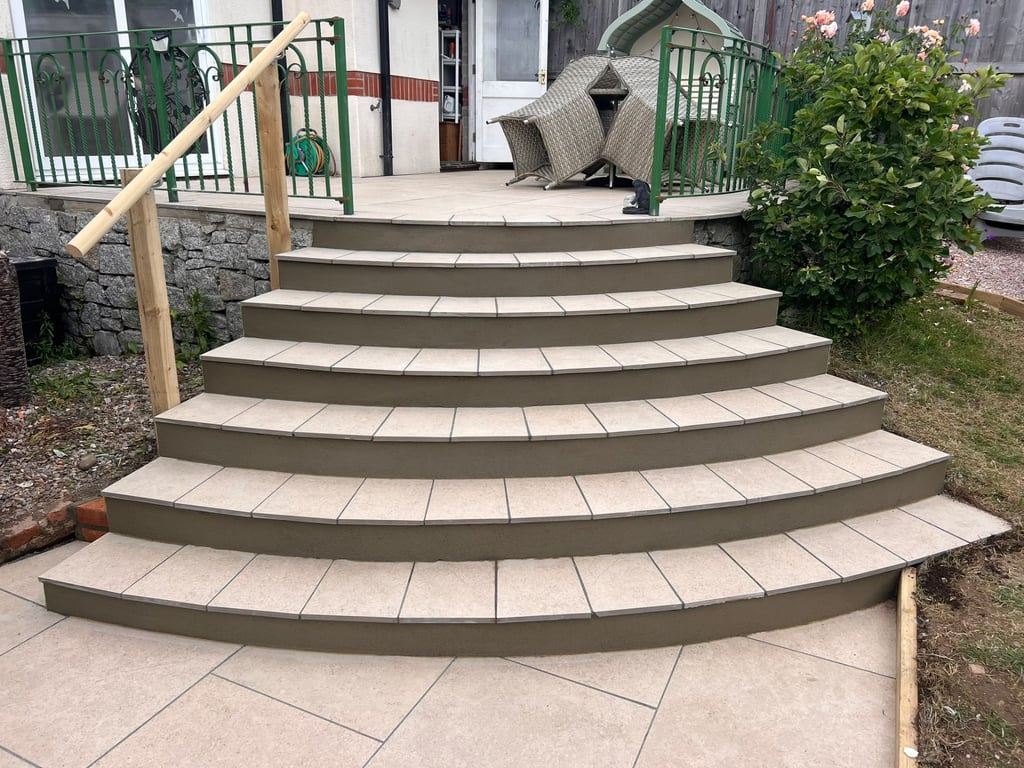
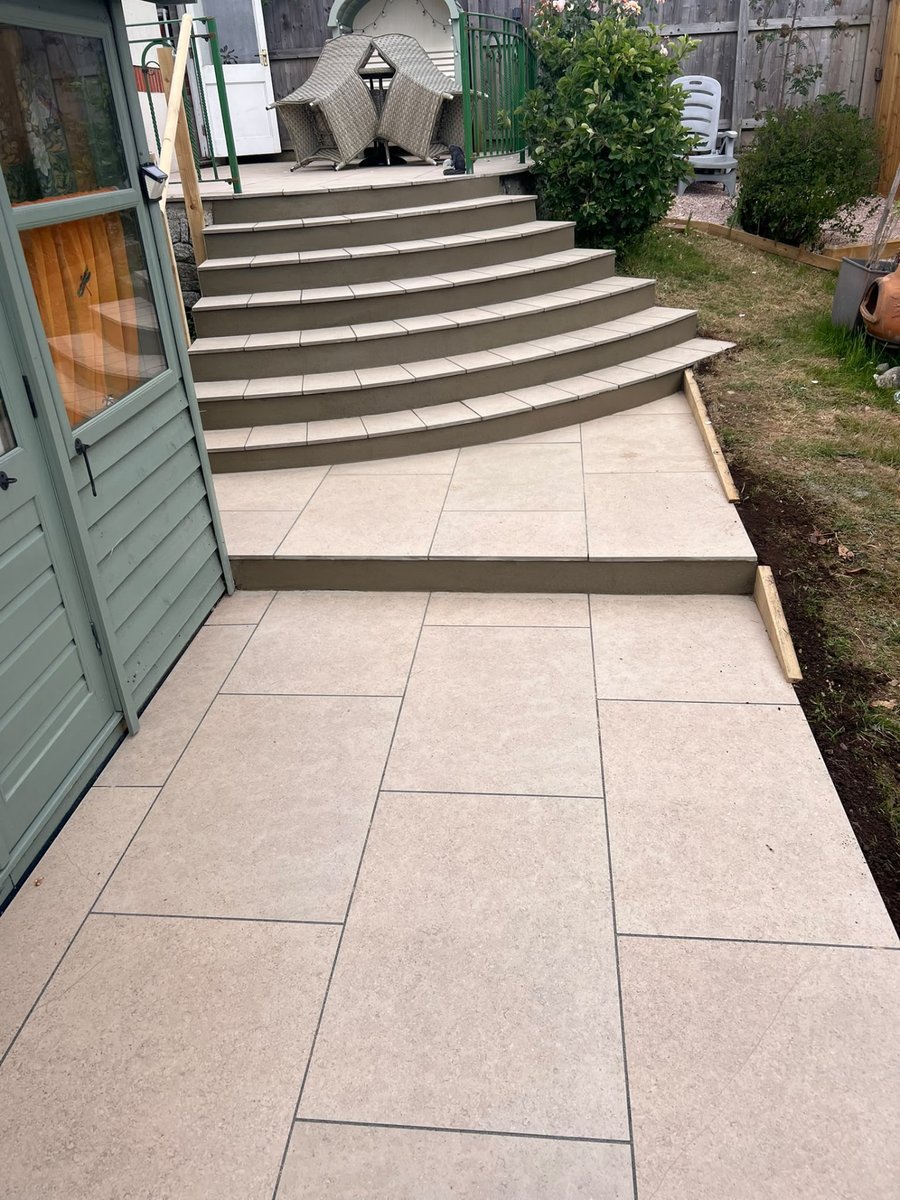
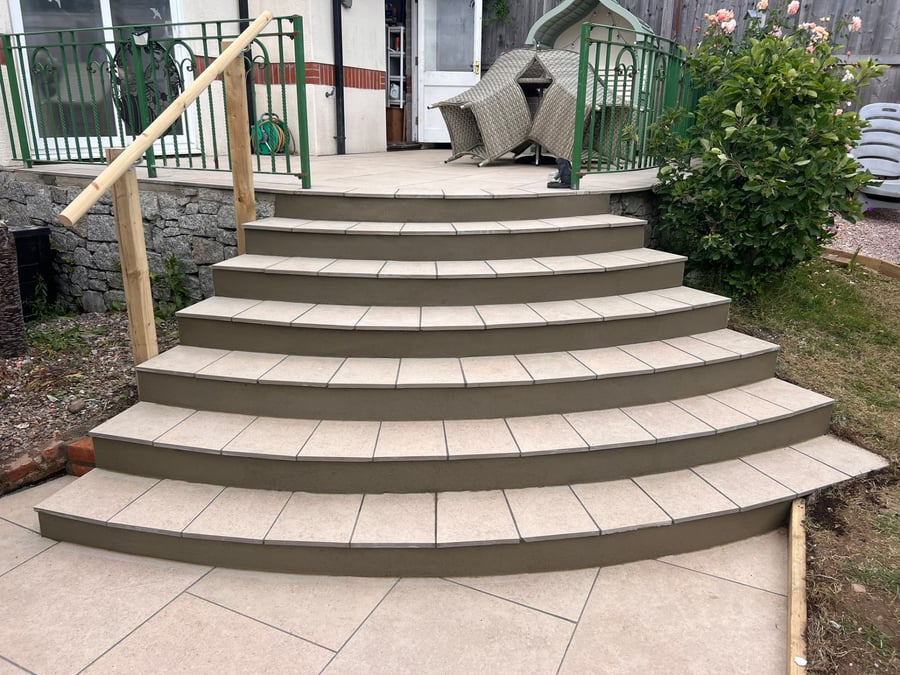
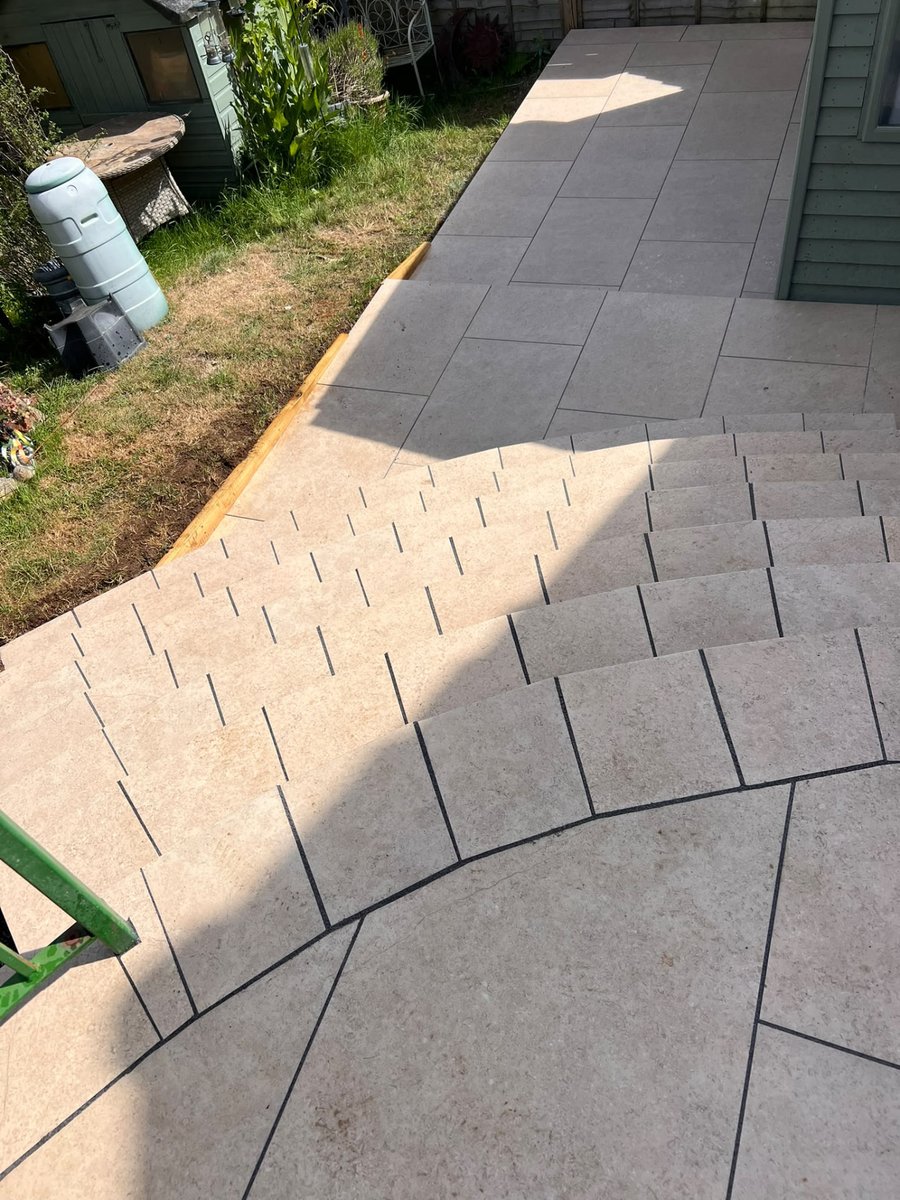
- Curved and radiused steps: softer, more generous flights that suit informal and planted gardens.
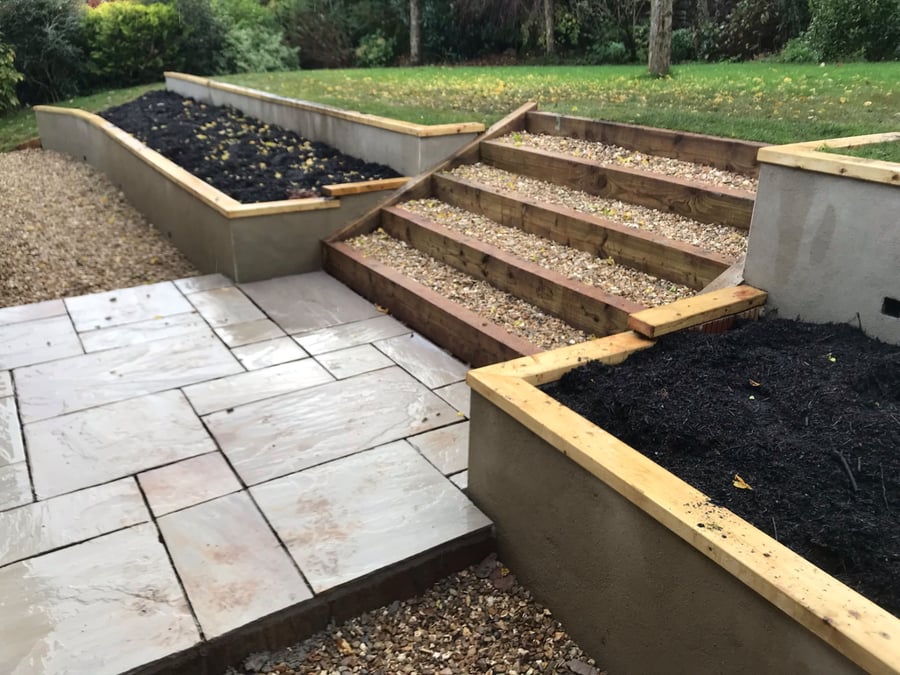
- Steps built into a retaining wall: where terracing and access are one piece of work rather than two.
- Sleeper and timber steps: for banks, woodland paths and rural plots where masonry would look heavy.
Dimensions, materials and lighting
Garden steps are more comfortable with a lower rise and a deeper going than indoor stairs, because people walk them in the dark and carry things up them. We set those dimensions on site against the total level change rather than cutting to a standard.
Treads can be natural stone, porcelain, brick-on-edge or concrete. Porcelain and sawn stone need the correct bullnose or nosing detail; riven stone gives a softer edge. Slip resistance is worth prioritising on any shaded flight.
Lighting makes a real difference to how much a garden is used after dark. Ducting for low-level or recessed step lights goes in during the build, because retrofitting it means lifting treads.
Examples of our work
Slide through photos of finished projects across South Devon.
Where we do this work
Related services
Back to the PC Landscaping homepage, see all services or get in touch with Phil.
Garden & Patio Steps: common questions
How much do garden steps cost?
It depends on the total rise, the number of steps, materials and whether a retaining wall or landing is involved. Phil measures the level change on site and gives one fixed price.
Can you match the steps to my existing patio?
Usually yes, we can work in the same stone or porcelain where it's still available, or choose a deliberate contrast if matching isn't possible.
Can you repair existing steps rather than rebuild?
Sometimes. If the footing and core are sound and only the treads have failed, re-bedding treads is sensible. If the flight is moving, the core is the problem and rebuilding is the honest answer.
Do you fit handrails?
We build the fixings in for a handrail where you want one, so it's anchored into the structure rather than bolted onto a finished tread.
How long do steps take to build?
Most domestic flights are a few days including the footing and curing time. Larger terraced schemes with retaining walls take longer.
Can you make the steps less slippery?
Yes: slip-rated material, a fall across each tread and good drainage all help, and step lighting makes a shaded flight much safer to use.
Which areas do you cover?
Teignbridge, Torbay, Exeter and the South Hams, from Denbury near Newton Abbot.
Client feedback
Recent words from South Devon gardens
“Phil finished the remainder of my featherboard fence. Started the job promptly, arrived on time and finished the job professionally.”
Big Steve
Featherboard fencing · Google review
“Fitted our hardwood deck and it looks great! Decent price and took just a couple of days plus they cleaned up after themselves.”
Steve Marson
Hardwood decking · Google review
“Phil and Nigel did a complete redesign of our garden, did a very professional job from start to finish… this is the second job they have done for us and we have another project for later in the year.”
Robert Down
Full garden redesign · repeat client · Google review
“Fab job for my pathway around my house and patio… Phil's suggestion and explanation of the construction work was the most solid.”
Hung Alice
Pathway & patio · Google review
Get a fixed price for your garden steps
Phil measures the level change, works out a comfortable flight and quotes one fixed figure.
30 years' experience · £2 million public liability · 8am–6pm, Monday to Friday